Can you lose weight by sleeping?
Author: Nóra Petri
Why are we hungrier and more tired after a bad night’s sleep?
You slept badly. In the morning, you can barely get out of bed, you have no energy during the day, you want to drink more coffee, and in the afternoon you are suddenly overcome by an irresistible craving for something sweet or salty. By evening, even the thought of working out makes you tired.
It is easy to say: “I just don’t have enough willpower.”
But that may not be the case at all. Maybe you are simply tired.
Sleep is about much more than how rested we feel the next day. It can affect our appetite, eating behavior, energy levels and how much we move. And that is directly connected to how easy it is for us to maintain our weight over the long term.
One randomized study followed adults who regularly slept less than 6.5 hours and were overweight. When they extended their sleep by an average of about 1.2 hours, their energy intake decreased by an average of 270 kcal per day compared with the control group. They were not given a prescribed diet or a new exercise program. (PMID: 35129580 )
This does not, of course, mean that “sleep more and lose weight.” Sleep is not a diet. However, it clearly shows that sleep can play a role in how much and how we eat.
Next time you are about to start a task after 10 p.m., remember this!
When we are tired, we tend to blame ourselves. We think we lack self-discipline, eat too much and do not have enough willpower. But we cannot override the way our bodies function through willpower alone. Our appetite is influenced by hormones: the body constantly sends signals to the brain about how much energy we need, how hungry we are and how full we feel.
What we feel is this: we eat differently when we are tired.
On a sleep-deprived day, a pastry, chocolate, baked goods or another energy-dense food may seem much more appealing. Fatigue affects our appetite, our desire for rewarding foods and the way we make decisions.
That is why sometimes we do not need more willpower, but simply more sleep.
When we sleep poorly, we may have less energy the next day. As a result, we are more likely to skip a workout, walk less, sit more, avoid the stairs and simply long to go to bed by the evening. One such day is not a problem, of course. But if this happens regularly, the effects can add up.
Less sleep, less energy, less movement, more cravings, and greater difficulty controlling what we eat.
And before we know it, a vicious cycle can develop.
Sleep can also affect our metabolism. Even after a short period of sleep deprivation, insulin sensitivity may measurably decline, meaning that cells may respond less effectively to insulin signals. This does not mean, of course, that one bad night will give someone a metabolic disease. However, if someone regularly sleeps too little or sleeps poorly, this may negatively affect metabolic health in the long term and has also been associated with a higher risk of insulin resistance and type 2 diabetes, among other conditions.
That is why I do not consider sleep an “extra” that comes after nutrition and exercise.
In my opinion, sleep is the foundation of a healthy lifestyle: when we are sleep-deprived, our bodies function differently.
It does not matter how mindfully we eat if we are regularly sleep-deprived. It does not matter how hard we train if we do not recover properly. And it does not matter how much we try to control our eating if our bodies are constantly tired and stressed.
Cortisol and melatonin also play an important role in this system.
Cortisol is often simply called the stress hormone, although it is a much more important hormone than that. Under healthy conditions, it also follows a daily rhythm: it is naturally higher in the morning, which helps us wake up and become active, and drops to a lower level at night. Melatonin, meanwhile, is not simply a “sleep-inducing hormone.” It is more accurately one of the body’s important nighttime signaling molecules, sending a signal to the brain that the biological night is approaching.
And this is where our modern lifestyle comes in. At 10 p.m., we are still sitting in bright light. We are using our phones, scrolling, reading emails, replying to messages and watching series. One more video. One more reply. Five more minutes.
Then, all of a sudden, it is midnight… But morning still starts at the same time.
One of the most important regulators of our circadian rhythm is the light-dark cycle. Natural morning light helps signal to the body that the day is beginning, while reducing light and stimulation in the evening supports the development of the nighttime rhythm.
That is why I pay attention not only to how many hours I sleep, but also to how I prepare for sleep.
I usually have my last meal around 7 p.m. If I work out, I eat a protein-rich dinner after training, and I generally do not have another substantial meal afterward. Not because I think everyone should fast after 6 or 7 p.m., but because this works for me.
I also try not to drink too much before bed. In my case, drinking a larger amount of fluid in the evening is more likely to lead to nighttime awakenings, so I pay attention to that as well. From time to time, I add glycine to my last glass of water, but I do not consider this a mandatory way to improve sleep either.
I practically do not consume caffeine anymore—I no longer need it. I know this may seem completely unimaginable to many people, but if someone has sleep problems, I think it is worth observing how caffeine affects them. Caffeine can remain in the body for a long time, and in more sensitive people, even afternoon consumption can affect falling asleep in the evening or the quality of sleep.
After 9 p.m., I gradually reduce the light and stimulation around me. I also try to use my phone as little as possible, and when necessary, I wear blue-light-blocking glasses. But I do not think that a pair of glasses alone can solve sleep problems.
I consider the entire evening environment much more important: less light, less stimulation, less information and consistency.
After 10 p.m., I no longer like to fill my mind with more news, videos and messages. Instead, I read a book. I like the final part of the evening to be less about the outside world and more about gradually slowing down.
I usually go to bed around 11 p.m. Not because 11:00 p.m. is some magical time, but because the body likes a predictable rhythm. If someone can go to bed earlier and that fits their lifestyle, they should of course feel free to do so. For me, consistency is what matters.
I also try to create a suitable environment for sleep in the bedroom. It is dark, there are no flashing lights, my phone is on silent and is not right next to the bed. If necessary, I use an eye mask. I also prefer a cooler room, because that makes a big difference to my sleep comfort.
And there is one more thing I consider particularly important: morning light.
When I wake up, I try to let natural light into the room as soon as possible. Most of the time, I go outside and have a good stretch. It takes no more than 3 minutes.
Natural morning light is an important signal for the circadian system and can help stabilize the rhythm for the next 24 hours. In other words, I actually start preparing for the next night’s sleep in the morning.
Of course, I do not always sleep perfectly. If I am traveling, go to bed late, have plans or simply have a worse night, I do not start to panic.
You do not have to be perfect.
One or two bad nights will not ruin our health. Just as one day without salad will not.
To me, longevity is not about perfection, but about bringing good habits back into our lives over the long term, again and again.
And now something completely new has begun for me.
Until now, I mainly knew what I was feeling.
Now I am also curious about what the data shows.
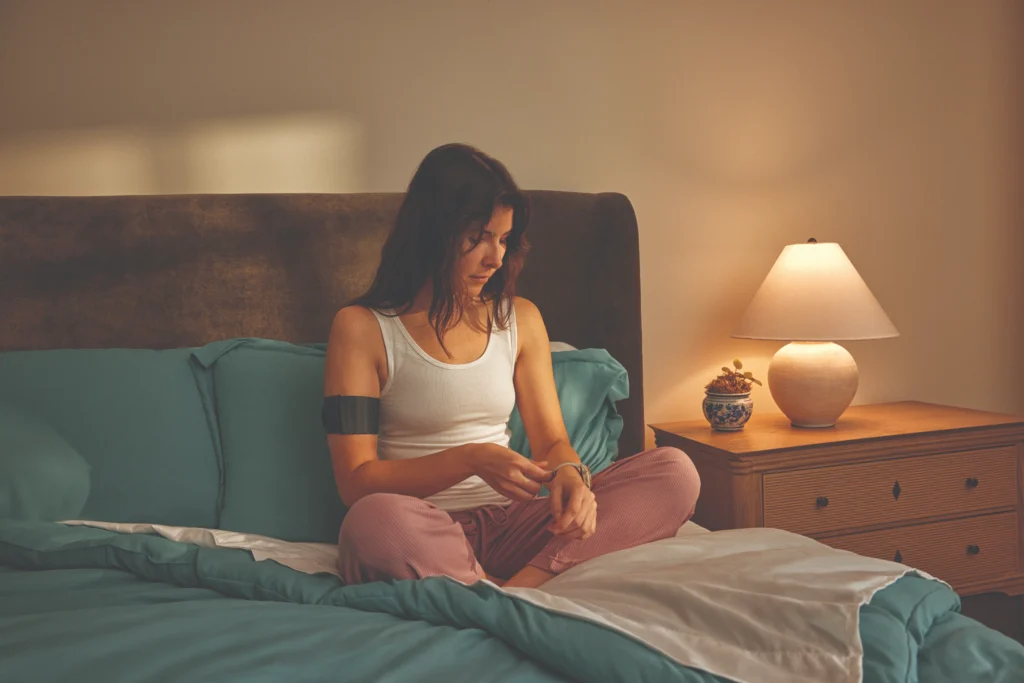
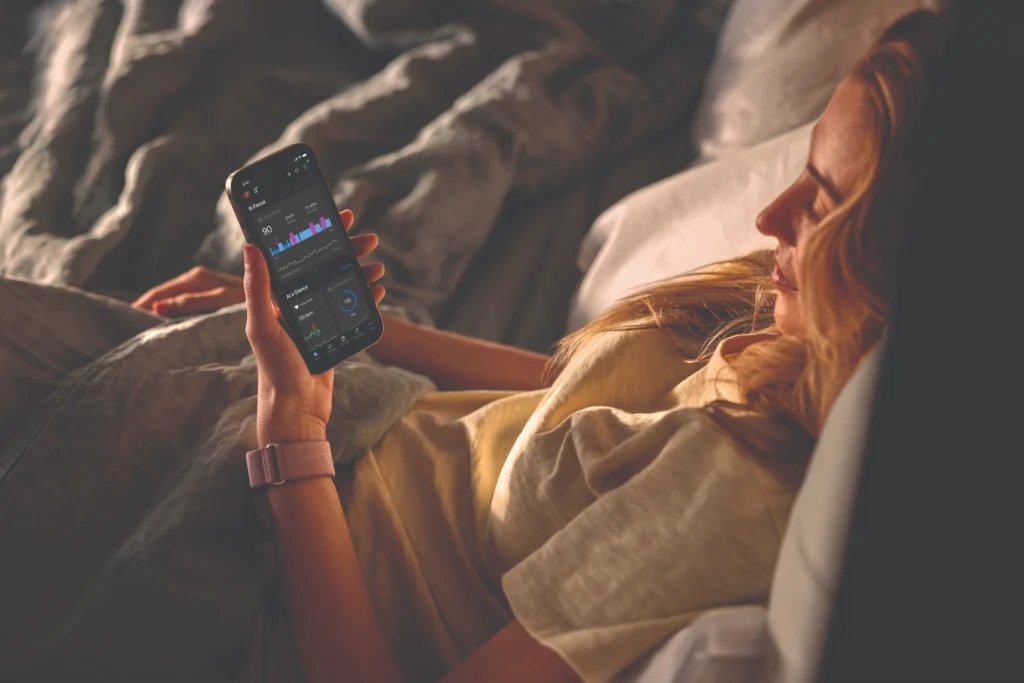
With the help of the Garmin Venu 4 and a sleep monitor, I have started tracking my sleep: sleep duration, nighttime heart rate, HRV, sleep rhythm and estimates of my sleep stages.
I am especially curious to see how these values change on weekdays and weekends, what I see when I have dinner later, have a more stressful day, move less, go to bed later or my usual routine is completely disrupted.
Because I think this is where longevity becomes truly exciting. What we feel and what we measure are not always the same. We may think we slept well. But what was the night actually like?
How continuous was it? How did our nighttime heart rate change? What happened to our HRV? What do the sleep-stage data show? And what changes when we consistently follow the same evening routine for an entire week?
I would now like to observe these things in myself as well. Not so that I can decide every morning, based on a single number, whether I “slept well.” But so that I can better understand my own body. Because one of the simplest tools for longevity may not be a new dietary supplement, a new diet or a new exercise program.
It may simply be turning off the lights at a reasonable time, putting our phones aside, allowing our minds to slow down and simply… sleeping.
And perhaps by doing so, we are not only supporting our energy levels the next day.
We are also supporting our long-term health.
Wishing you deep sleep tonight! 🌙
#Longevity #Biohacking #Sleep #SleepQuality #Health #Lifestyle #Recovery #Garmin
Source: Nóra Petri – Can You Lose Weight by Sleeping?